




【Steel Market Watch】Are Steel Prices Still Salvageable at Year-End?

Graphite electrodes are the "lifeline" of EAF steelmaking! As the core material for arc conduction and heating, they feature high conductivity and heat resistance, directly affecting molten steel quality and output. Mastering graphite electrodes means mastering the initiative in EAF steelmaking!
【Steel Market Watch】Are Steel Prices Still Salvageable at Year-End?
On December 8, the coking coal and coke futures markets experienced a "night of shock," with the main contracts plunging by more than 6%, breaking through support levels that had held for nearly nine years.
As key raw materials in the steel industry chain, the collapse in "dual coke" prices further intensified panic across the entire sector. From upstream to downstream, black commodities appear to be trapped in the same dilemma: a huge gap between strong expectations and weak reality.
The Twilight of the Market: The Struggle Between Strong Expectations and Weak Reality
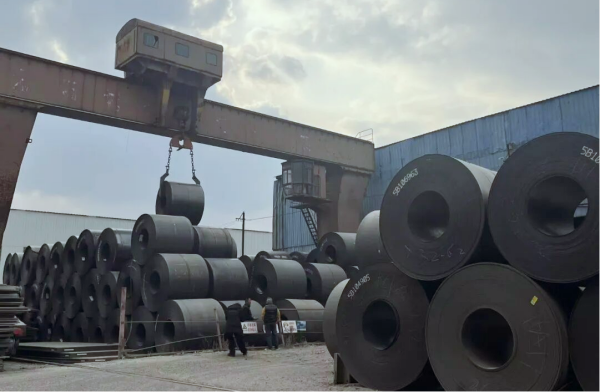
"Strong expectations" and "weak reality" — this seemingly contradictory pair of terms has become the most frequently mentioned topic in today's steel industry.
"Strong expectations" usually stem from policy signals. Macroeconomic measures, infrastructure investment, real estate regulation, stricter environmental production curbs, steel mill output restrictions and maintenance plans — every policy signal release can stir waves in the futures market.
Capital always chases expectations, while the real economy must confront reality. The reality is that this winter's temperatures have been higher than usual, and daily coal consumption at power plants has fallen short of expectations. The reality is that new real estate starts continue to decline, weakening demand for construction steel. The reality is that the manufacturing Purchasing Managers' Index (PMI) is hovering around the expansion–contraction threshold.
Market participants bluntly stated: "Steel prices today are like a kite with a broken string — they seem to fly high, but in fact have completely lost direction." Each time prices are lifted by news, they are slammed back down by fundamentals. After repeated cycles, the market's response to positive news has grown increasingly muted, creating a classic "cry wolf" effect.
The financial attributes of the steel industry are gradually overshadowing its commodity attributes, making price fluctuations more violent and harder to predict.
Dual Coke Shock: Transmission and Imbalance Along the Industrial Chain
In the steel industry chain, coking coal and coke — known as the "dual coke" — are indispensable raw materials in steelmaking. Their price movements directly affect steel production costs and, in turn, the profit distribution across the entire industry chain.
When Li Ming saw the sharp collapse in dual coke futures, he immediately realized the severity of the situation. This crisis, originating upstream, was rapidly transmitting along the industrial chain. Falling coke prices directly eroded the profit margins of coking enterprises, forcing some to consider production cuts.
At the same time, coking coal imports exceeded 10 million tons for three consecutive months, with Mongolian coal exports reaching 9.35 million tons in November, up 31.4% month-on-month. Pressure from the supply side further aggravated market imbalance.
For steel mills, lower raw material costs should theoretically be positive news. However, against the backdrop of equally weak steel demand, cost reductions have failed to translate into higher profits and instead dragged down the overall price center of black commodities.
One industry analyst noted: "The sharp fall in dual coke prices is only the surface phenomenon; the fundamental issue is that the entire black industry chain is in a state of oversupply." Data show that national average daily blast furnace hot metal output has fallen to around 2.32 million tons and continues to decline.
Every link in the industrial chain is attempting to pass pressure upstream or downstream, forming a typical negative feedback loop. Steel mills reduce coke purchases, coking plants lower operating rates, coal mines face inventory accumulation… This chain reaction has plunged the entire industry into distress.
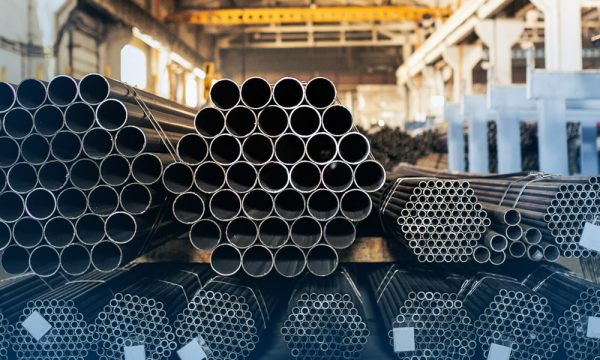
The Production Cut Dilemma: Conflict Between Collective Action and Individual Rationality
"To ensure the healthy development of the industry, only painful, industry-wide coordinated production cuts can lead to a longer-term future." This view from a veteran industry insider reflects a widely shared consensus.
Yet in practice, "coordinated action" faces a massive collective action dilemma. Each enterprise has its own interests and survival pressures; no one is willing to be the first to cut production and surrender market share.
From an economic perspective, this is a classic prisoner's dilemma. While universal production cuts would benefit the industry as a whole, for individual firms, the optimal strategy is not to cut output while competitors do. As a result, everyone chooses not to cut production, harming the entire industry.
This dilemma is particularly pronounced in the steel sector. China has hundreds of steel enterprises, varying widely in scale and cost structures. As market demand declines, high-cost producers face survival pressures, while low-cost producers seek to expand market share to dilute fixed costs.
The industry also lacks effective coordination mechanisms. Although steel industry associations exist, their enforcement power is limited, making it difficult to facilitate unified action across the sector.
The result is that steel output remains high despite industry-wide losses. Data show that in the first 11 months of this year, China's crude steel production was roughly flat year-on-year, even as market demand clearly weakened.
Searching for a Way Forward: From Capacity Optimization to Value Enhancement
Where is the way out for the steel industry? Industry experts have proposed different lines of thinking. Short-term price fluctuations cannot be resolved through a single measure; they require systematic structural adjustments and business model innovation.
Capacity optimization has become an industry consensus. The NDRC and other departments have repeatedly issued directives calling for strict control of steel capacity and the phase-out of outdated production. However, this top-down regulation takes time and faces resistance from local protectionism.
Some leading enterprises have already begun exploring differentiated competitive paths. Baosteel has upgraded its product mix, shifting its focus toward high value-added products such as automotive steel and home appliance steel. Shagang Group, meanwhile, has strengthened technological innovation to improve resource utilization efficiency.
The digital transformation of the steel industry is also accelerating. Technologies such as smart factories and industrial internet platforms are reshaping traditional production management models, enhancing production flexibility and market responsiveness.
Green transformation is another critical direction. As China advances its "dual-carbon" goals, the steel industry — a major source of carbon emissions — faces enormous pressure to reduce emissions. This is both a challenge and an opportunity. Cutting-edge technologies such as hydrogen metallurgy and carbon capture and storage (CCS) could reshape the industry landscape in the future.
Meanwhile, industry consolidation is accelerating. Through mergers and reorganizations that increase industry concentration, disorderly competition can be reduced and industry coordination strengthened. The formation and expansion of China Baowu Steel Group is a typical example.
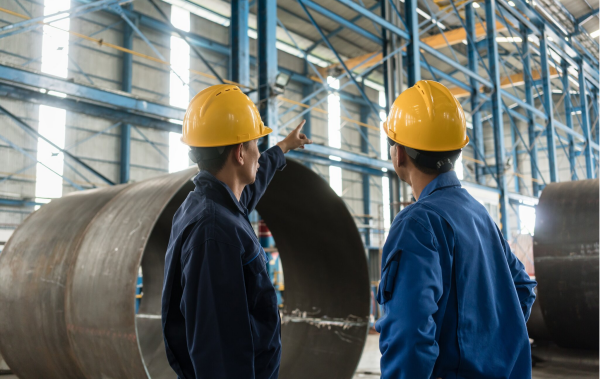
The predicament of the steel industry is, in essence, a microcosm of China's broader economic structural transformation. When traditional growth drivers weaken and new ones have yet to fully take shape, industries inevitably endure a period of pain.
Feel free to contact us anytime for more information about the EAF Steel market. Our team is dedicated to providing you with in-depth insights and customized assistance based on your needs. Whether you have questions about product specifications, market trends, or pricing, we are here to help.
No related results found




0 Replies