




【Understanding the Types of Recarburizers】A Critical Carbon Source Supplement

【Understanding the Types of Recarburizers】A Critical Carbon Source Supplement
Recarburizer is a solid additive with high carbon content and stable chemical properties, mainly used in steelmaking, foundry, and other metal processing industries. It is most widely used in the steel smelting industry. During the smelting process of steel products, factors such as long smelting time, holding time, and overheating time often increase the loss of carbon elements in molten iron, causing the carbon content in molten iron to decrease and fail to meet the expected theoretical value required for smelting.
In the steel and foundry industries, recarburizers have always been regarded as important additives. By adding an appropriate amount of recarburizer to metals or alloys, the strength, hardness, and corrosion resistance of materials can be effectively improved.
According to production raw materials, recarburizers can be divided into the following categories.
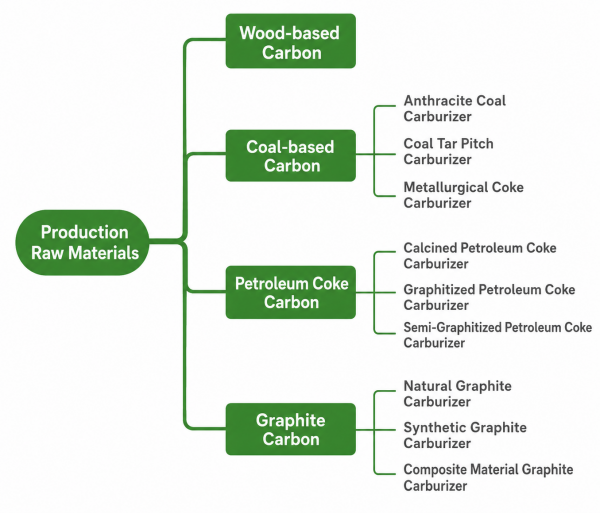
(I) Wood-Based Carbon
Made from wood raw materials through high-temperature carbonization treatment. It has advantages such as high purity and low hygroscopicity, but the cost is relatively high, and it is mainly used in the precision casting industry.
(II) Graphite-Based Carbon
Soil Graphite Recarburizer
This refers to the application of soil graphite in steelmaking or foundry recarburization. Its main production area is Hunan Province. It is a direct application of soil graphite powder, usually with carbon content of 75-80%, and its carbon content can be increased through purification.
Natural Graphite Recarburizer
Mainly made from natural graphite, especially flake graphite, with carbon content ranging from 65-99%. It is mainly used in steel plants and is generally not suitable for foundries.
Composite Graphite Recarburizer
Produced using graphite powder, coke powder, petroleum coke, and other by-product materials, with different binders added and formed into rod or granular shapes by machines. Carbon content is generally between 93-97%, while sulfur content is extremely unstable, usually between 0.09-0.7%. Its advantage is low price, while disadvantages include unstable addition amounts during use and difficulty controlling sulfur content.
(III) Coal-Based Carbon
Made from coal tar through dehydration, desulfurization, and other treatments. It has advantages such as low price and abundant resources, but its sulfur content is relatively high, requiring attention to environmental protection issues.
Calcined Coal Recarburizer
Calcined coal recarburizer is produced by calcining low-ash and low-sulfur washed anthracite coal in a calcining furnace at around 1250°C.
Main Production Areas: Shizuishan in Ningxia and Wuhai in Inner Mongolia.
Process: Washed anthracite coal dried at room temperature → high-temperature calcination at 1300°C in calcining furnace → removal of volatile matter → discharge from furnace → crushing → screening → packaging.
Product Specifications: Generally C: 90-93%, S: 0.3-0.5%.
Applications: Mainly used by steelmaking enterprises. In electric arc furnace steelmaking, coke or anthracite coal is often added as a recarburizer. However, due to the high ash and volatile matter content of these materials, they are rarely used as recarburizers in induction furnace cast iron smelting. Some foundries use them for gray cast iron.
Pitch Coke Recarburizer
A by-product of coal tar hydrogenation oil production, it is a high-carbon, low-sulfur, low-nitrogen recarburizer extracted from tar. Carbon content ranges between 96-99.5%, with low volatile matter, dense structure, high particle mechanical strength, good wear resistance, and easy graphitization.
Metallurgical Coke Recarburizer
Produced from coking coal and commonly known as blast furnace coke. In addition to smelting applications, it is also used for recarburization of metal furnace charges.
(IV) Coke-Based Carbon
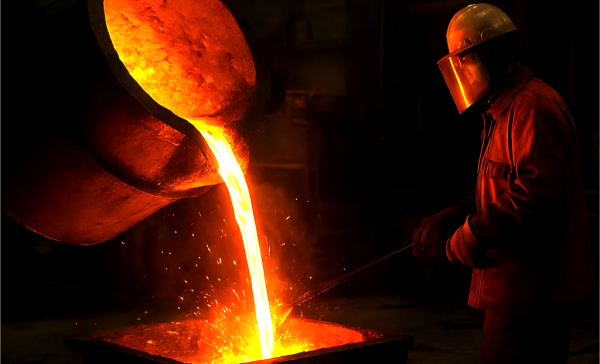
Made from petroleum coke through high-temperature graphitization treatment. It has advantages such as high carbon content, few impurities, and low cost, and is widely used in the steel and foundry industries.
Calcined Petroleum Coke Recarburizer
Calcined petroleum coke recarburizer is produced by placing low-sulfur petroleum coke into a calcining furnace and removing moisture, ash, volatile matter, and other impurities through high-temperature calcination at 1300°C. Calcined petroleum coke appears as a black or dark gray hard solid with metallic luster and porous structure.
Main Production Areas: Liaoning, Tianjin, and Shandong.
Process: Raw material storage → crushing and conveying → cartridge dust collection → calcination → volatile matter enters tank furnace flue for combustion (combustion flue gas) → cooling and discharge → cartridge dust collection (dust removal exhaust gas) → storage → calcined petroleum coke.
Product Specifications: Generally C: 96-99%; S: 0.3-0.7%.
Applications: Calcined petroleum coke recarburizer can be used in steelmaking, ironmaking, and ordinary casting industries. It can also be used for producing brake discs, crankshafts, brake pads, and other casting products. It features high carbon, low sulfur, low ash, compact density, resistance to decomposition, and moderate consumption rate, making it an ideal carbon additive material and reaction intermediate for metallurgy, chemical, machinery, and power industries.
Due to its advantages in price and supply among various types of recarburizers, it has been widely applied in the market. It can not only compensate for carbon burn-off during steel smelting to ensure required carbon content for specific steel grades, but can also be used for post-furnace adjustment. As an important raw material for induction furnace molten iron melting, its quality and usage directly affect the condition of molten iron.
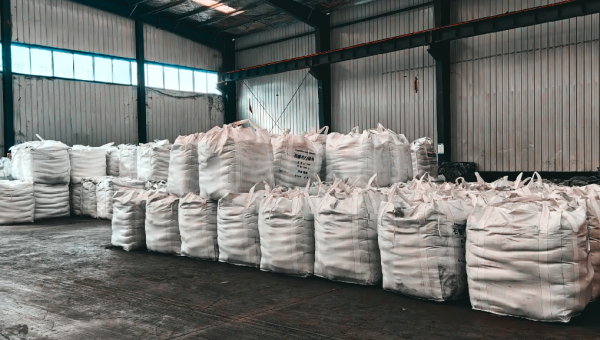
Graphitized Petroleum Coke Recarburizer
This is a graphitized product produced by processing petroleum coke in graphitization furnaces at temperatures around 3000°C. Its ash, sulfur, and gas contents are significantly reduced, featuring fast absorption, high carbon content, and low sulfur content.
Another source comes from machining particles or crushed waste graphite electrodes generated during electrode production. Since graphite electrodes themselves have undergone graphitization treatment, their waste materials can also be used as recarburizers. In addition, tailings from anode material production are also excellent sources of recarburizers.
Main Production Areas: Inner Mongolia, Jiangsu, Sichuan, Shandong, Henan, and others.
Process: Graphitized recarburizer is the product obtained after petroleum coke undergoes high-temperature graphitization treatment.
Graphitized petroleum coke is produced by placing petroleum coke in a graphitization furnace, generally using Acheson furnace equipment. Carbon baked products are laid between the conductive electrodes at both ends of the Acheson furnace as conductive heating cores. After high-temperature treatment at around 3000°C, the disordered layered carbon crystal structure of petroleum coke transforms into a hexagonal layered carbon structure, meaning petroleum coke becomes graphite. This process is called graphitization.
Product Specifications: Generally C > 98-99.5%; S < 0.05-0.03%.
Applications: Graphitized recarburizer is widely used in steel metallurgy, foundry, machinery, chemical, and other industries. Its main applications include: serving as a carbon additive during steel smelting to improve steel quality and performance; serving as a covering agent during casting to protect casting surfaces from oxidation and nitridation; serving as a lubricant during machining to reduce friction and wear; and serving as a catalyst or carrier in chemical processes to improve reaction efficiency and product quality.
Advantages: Among recarburizers, the best quality type is low-sulfur, low-nitrogen recarburizer, also called artificial graphite. Through high-temperature treatment or other methods, the molecular structure of carbon products changes into a more orderly arrangement. This molecular arrangement provides wider carbon molecular spacing, making it easier to decompose and nucleate in molten iron or molten steel.
① High fixed carbon content effectively increases carbon content and strength of steel;
② Low ash content reduces impurities and oxide generation in steel;
③ Low moisture content reduces hydrogen solubility and porosity in steel;
④ Low sulfur content reduces sulfide formation and brittleness in steel;
⑤ Low chlorine content reduces chloride corrosion and stress corrosion cracking in steel.
Although graphitized recarburizer is relatively more expensive than other recarburizers, from the perspective of overall usage cost, graphitized recarburizer is a more economical choice.
Semi-Graphitized Petroleum Coke Recarburizer
Semi-graphitized recarburizer, also called medium-temperature graphitized recarburizer, refers to the insulation layer generated during the high-temperature graphitization process in graphitization furnaces (Acheson furnaces). The calcination temperature ranges from 1700-2700°C, featuring high fixed carbon, fast dissolution speed, high absorption rate, moderate sulfur content, and high cost performance.
Semi-graphitized recarburizer is often used by foundries as a recarburizer, with a more economical and cheaper price compared to graphitized recarburizer. The difference between the two mainly lies in sulfur content. Due to the influence of calcination temperature and graphitization time in graphitization furnaces, the sulfur content in semi-graphitized recarburizer is higher than that in graphitized recarburizer. This is the main difference between graphitized recarburizer and semi-graphitized recarburizer.
Feel free to contact us anytime for more information about the Recarburizers market. Our team is dedicated to providing you with in-depth insights and customized assistance based on your needs. Whether you have questions about product specifications, market trends, or pricing, we are here to help.
No related results found




0 Replies