




【Anode Materials】2025 Supply Side: Rising Share of Artificial Graphite and Higher...

The rapid growth of the EV and energy storage industries is boosting demand for high-performance lithium batteries, driving the market for quality petroleum coke and synthetic graphite. The quality and particle size of calcined petroleum coke directly affect synthetic graphite performance, especially in anode production.
【Anode Materials】2025 Supply Side: Rising Share of Artificial Graphite and Higher Capacity Utilization
Overall, on the supply side of anode materials in 2025, anode capacity continued to expand, although the growth rate of capacity slowed. Anode material output increased significantly year on year, and artificial graphite anodes remained the dominant product category, mainly supported by downstream demand growth. At the same time, anode capacity utilization increased year on year.
I. Rising Share of Artificial Graphite, Accelerated Industrialization of Silicon-Based Anodes
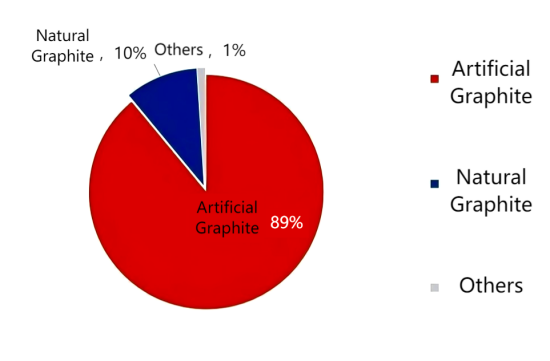
Figure 1: Output Share by Product Type of Anode Materials in 2025
Data source: Oilchem
In 2025, China's anode material output reached 2.59 million tons, representing a year-on-year increase of 37%. By product type, artificial graphite anode technology is relatively mature, featuring long cycle life, high safety, and relatively low cost, making it suitable for power batteries and energy storage batteries. This year, orders for energy storage batteries increased rapidly, driving higher demand for artificial graphite anodes. Artificial graphite currently accounts for 89% of total anode materials, an increase of 2 percentage points year on year.
Natural graphite anodes have lower energy consumption during production and better low-temperature performance; however, they suffer from poor rate capability, are prone to deformation, and overall performance is inferior to artificial graphite. As a result, market demand has gradually declined. In addition, due to relatively low processing margins, the market share of natural graphite anodes has continued to shrink and currently stands at 10%.
Mesophase carbon microspheres were a major anode material in the early stage of industry development. Due to low energy density and high cost, they have gradually been replaced by graphite-based anode products, resulting in a very small market share. Some mesophase carbon microsphere anode producers have also shifted their production to artificial graphite anodes.
Silicon-based anodes achieved breakthroughs this year mainly in CVD (chemical vapor deposition) technology, with rapid growth in capacity deployment. However, due to high silicon costs and significant volume expansion, commercial application remains limited. Nevertheless, silicon-based anodes have the greatest long-term development potential. Hard carbon anodes have developed alongside the application of sodium-ion batteries. Hard carbon anodes have high manufacturing costs and limited feedstock availability, and currently only a limited number of manufacturers are capable of producing hard carbon anodes.
II. New Capacity Concentrated in Southwest China
Table: Newly Added Anode Material Capacity in 2025 (10,000 tons)
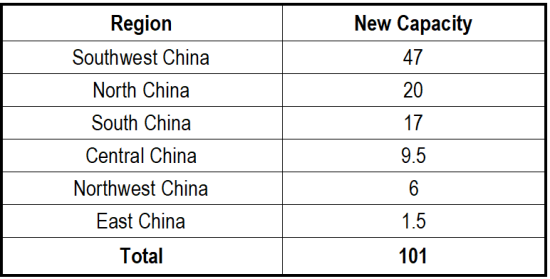
In 2025, the increase in anode material capacity mainly came from leading anode enterprises seeking to improve integrated process chains and expand market share. Capacity expansion among small and medium-sized enterprises was limited, resulting in a clear slowdown in overall capacity growth. Newly added effective capacity totaled 1.01 million tons per year, accounting for 23% of total capacity for the year, while the capacity growth rate declined to 30%.
Most of the newly added anode capacity was constructed in 2024 and gradually released in 2025, entering effective operation. Leading enterprises mainly include Shanshan (Sichuan), Shangtai (Shijiazhuang), Kaijin (Guizhou), and Zichen (Sichuan). Effective capacity is largely concentrated in the southwestern region, leveraging regional advantages in green electricity to reduce costs. In addition, battery manufacturer Gotion has deployed anode material capacity, and anode capacity from leading anode enterprise Sunstone has been released steadily.
III. Slower Capacity Growth and Improved Capacity Utilization
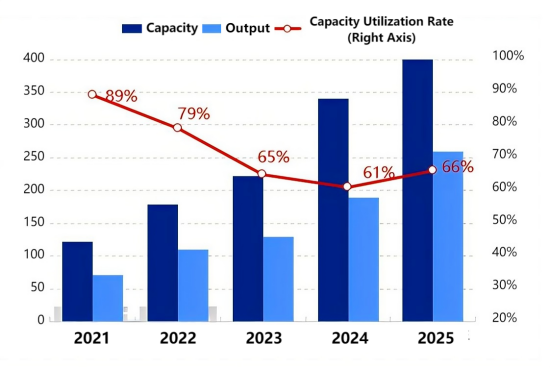
Figure 2: Capacity Utilization Rate of China's Anode Materials in 2025
Data source: Oilchem
From 2021 to 2024, anode material capacity expanded rapidly, outpacing output growth, leading to a year-by-year decline in capacity utilization. In 2025, effective anode material capacity reached 4.41 million tons, representing a year-on-year increase of 29.7%. The annual growth rate declined by 23.5 percentage points, and was 7.9 percentage points lower than the compound annual growth rate over the past five years.
As capacity growth slowed and output growth accelerated, anode material capacity utilization rebounded to 66%, an increase of 5 percentage points year on year. Polarization among anode enterprises became more pronounced. Leading enterprises released capacity more fully and, during peak seasons, most leading players operated at full capacity. Second- and third-tier enterprises mainly engaged in toll processing and OEM services for leading enterprises.
In 2025, with increased anode material capacity and growing demand from downstream new energy vehicle and energy storage markets, anode material production and sales rose sharply. At the same time, anode material enterprises advanced cost reduction and efficiency improvement measures, strengthened cost control, and expanded profit scale. The anode material industry is demonstrating strong vitality and momentum.
Feel free to contact us anytime for more information about the Anode Material market. Our team is dedicated to providing you with in-depth insights and customized assistance based on your needs. Whether you have questions about product specifications, market trends, or pricing, we are here to help.
No related results found




0 Replies