




【Carbon Knowledge】Three Dimensions for Choosing the Right Recarburizer

Calcined petroleum coke, with its high carbon content, low sulfur, and low impurities, plays a vital role in modern manufacturing, especially in the aluminum and steel industries.
【Carbon Knowledge】Three Dimensions for Choosing the Right Recarburizer
Carbon Content: Determines Basic Efficiency, but Is Not the Only Criterion
Fixed carbon content is one of the most intuitive indicators for evaluating a recarburizer and is also the technical parameter most customers focus on first. Its significance lies in the fact that the higher the fixed carbon content, the more effective carbon can theoretically be provided per unit of addition, resulting in a more direct contribution to composition adjustment.
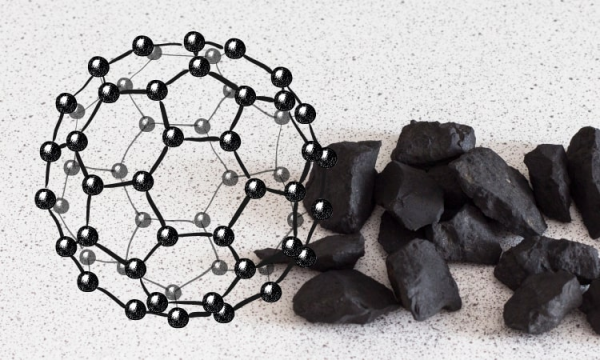
Therefore, under the same operating conditions, a higher fixed carbon content usually means a stronger foundation for carbon utilization efficiency. This is particularly important for companies pursuing stable composition control and reduced ineffective additions.
However, it must be recognized that a high fixed carbon content does not necessarily mean the best overall performance in actual use. What production sites truly care about is not "how high the material's specification appears on paper," but rather "whether it can perform effectively and consistently after being added into the furnace." If a product has a relatively high fixed carbon value but unstable absorption performance, significant batch-to-batch fluctuations, or unsatisfactory impurity control, then its overall practical performance may not be ideal.
In other words, carbon content is the starting point for evaluating the value of a recarburizer, but it is not the conclusion itself. For professional purchasers and process engineers, greater attention should be paid to whether that carbon content can be consistently converted into effective performance under actual production conditions.
Absorption Rate: Determines Actual Utilization Efficiency and Process Stability
If carbon content represents theoretical supply capability, then absorption rate determines actual conversion efficiency. After a recarburizer is added into molten iron or melt systems, whether it can be effectively absorbed and whether the absorption speed remains stable directly affect composition adjustment efficiency, production rhythm, and overall operating costs. For foundries, what truly matters is not how much "nominal carbon" has been purchased, but how much carbon actually enters the effective reaction process.
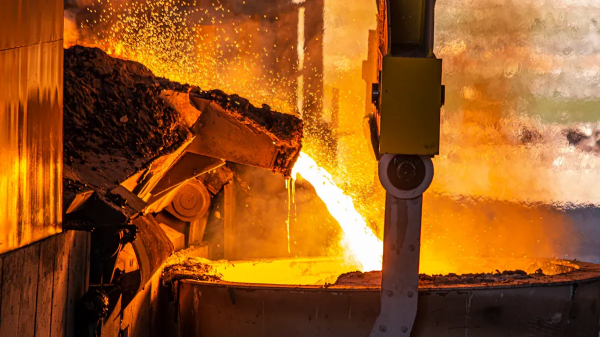
A high and stable absorption rate usually means the following advantages:
1. Composition adjustment becomes more direct, making furnace-front control easier to achieve;
2. Higher feeding efficiency, reducing the need for repeated adjustments;
3. Smoother melting rhythm, helping improve on-site operational efficiency;
4. Under the same target requirements, lower comprehensive consumption for unit composition adjustment.
Conversely, if the absorption rate is low or fluctuates significantly between batches, situations may arise where "the theoretical values look good, but the on-site performance is average." Although the purchase price may appear lower on the surface, actual production often requires additional additions, repeated composition corrections, or extended adjustment time to compensate, ultimately increasing overall costs.
Therefore, from a professional selection perspective, absorption rate is not only a technical indicator but also a reflection of production stability. It connects laboratory parameters with on-site performance and is a critical dimension when evaluating the true value of a recarburizer.
Impurity Control: Impacts Product Quality and Subsequent Process Burden
In recarburizer selection, impurity control is often the most overlooked factor, yet it is precisely one of the key elements determining long-term user experience.
Common impurity indicators requiring close attention include sulfur, nitrogen, ash content, and others. Different product systems and application scenarios vary in their sensitivity to these indicators, but the overall principle remains the same: the more controllable the impurities, the lower the uncertainty introduced into subsequent production processes.

Taking sulfur content as an example, in certain foundry applications, sulfur levels directly affect material compatibility and the difficulty of subsequent process control. High ash content may reduce material purity and effective utilization efficiency. Nitrogen and other indicators, if poorly controlled, may also create additional burdens in specific process scenarios.
From practical production experience, many manufacturing problems are not necessarily caused by "insufficient carbon addition," but rather by "excessive impurity introduction," which increases the pressure on composition control, process adjustment, and quality stability. For this reason, more and more companies are no longer satisfied with evaluating only fixed carbon values during procurement, but are instead paying greater attention to whether the entire indicator system is well balanced.
Strict impurity control not only produces better-looking laboratory test results, but more importantly helps customers achieve more stable product quality and more controllable production processes during long-term use.
The Key to Recarburizer Selection Is Not Maximizing a Single Parameter, but Achieving Comprehensive Matching
From a procurement perspective, companies naturally hope to obtain products featuring high carbon content, high absorption rate, low impurities, and reasonable cost. However, in practical applications, the optimal solution under different operating conditions is not always provided by the product with the single highest parameter.
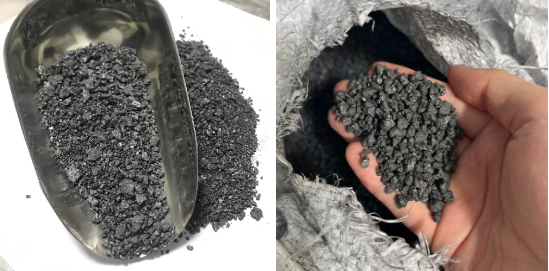
A truly professional selection logic should be based on "comprehensive matching." In other words, selection should be evaluated in combination with:
1. The melting process route;
2. Product material requirements;
3. Requirements for absorption speed and stability;
4. Control requirements for sulfur, nitrogen, ash, and other impurity indicators;
5. Cost targets and on-site management capability.
On this basis, companies can then determine which type of recarburizer is most suitable for the current production system. Only when carbon content, absorption rate, and impurity control achieve a reasonable balance can the value of a recarburizer truly be reflected through stable quality, controllable efficiency, and optimized overall costs.
This is also why more and more customers are no longer simply comparing "price quotations" during procurement, but are instead paying greater attention to whether suppliers possess stronger material expertise and more professional selection guidance capabilities.
Conclusion
Although recarburizer selection may appear to be a procurement decision, in essence it is a comprehensive judgment involving quality control, process efficiency, and cost management. Carbon content determines the basic supply capability, absorption rate determines actual utilization efficiency, and impurity control determines long-term stability. Only by evaluating these three dimensions within a unified framework can the comprehensive value of a recarburizer truly be understood.
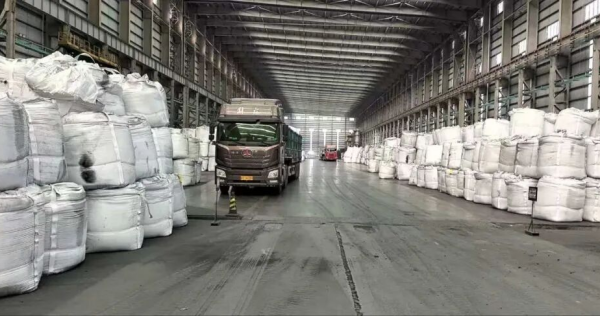
For companies, choosing the right recarburizer is not simply about purchasing a batch of raw materials, but about laying the foundation for stable production, quality control, and cost optimization in subsequent operations.
Feel free to contact us anytime for more information about the Recarburizers market. Our team is dedicated to providing you with in-depth insights and customized assistance based on your needs. Whether you have questions about product specifications, market trends, or pricing, we are here to help.
No related results found




0 Replies