




【Carbon Knowledge】Why Is It Important to Control Carbon, Sulfur, and ... in Recarburizers?

Calcined petroleum coke, with its high carbon content, low sulfur, and low impurities, plays a vital role in modern manufacturing, especially in the aluminum and steel industries.
【Carbon Knowledge】Why Is It Important to Control Carbon, Sulfur, and Nitrogen Content in Recarburizers?
Recarburizers are important foundry auxiliary materials mainly used to improve the structure and properties of molten iron after solidification. The use of recarburizers can not only increase the carbon content in steel and iron, but also reduce production costs and save resources.
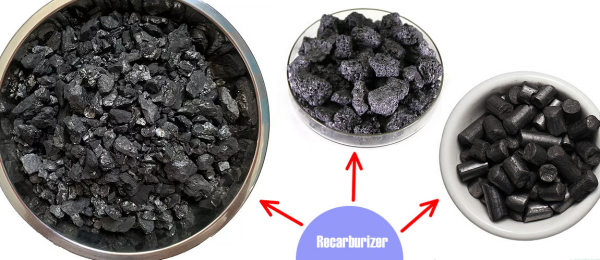
During cast iron and cast steel production, castings require specific carbon content levels, and recarburizers are used to increase the carbon content in molten iron. For example, in melting operations, common furnace charge materials include pig iron, scrap steel, and return materials. Pig iron has a high carbon content, but its procurement cost is relatively higher than scrap steel. By adding recarburizers, the proportion of scrap steel can be increased while reducing pig iron usage, thereby lowering casting production costs to a certain extent. The use of recarburizers can not only compensate for carbon loss during steelmaking and ensure the required carbon content for specific steel grades, but can also be used for post-furnace adjustment. As an important raw material in induction furnace iron melting, the quality and application method of recarburizers directly affect the condition of the molten iron.
Many materials can be used as cast iron recarburizers, including artificial graphite, calcined petroleum coke, natural graphite, coke, anthracite, and mixtures made from these materials. Among them, artificial graphite offers the best quality, while petroleum coke recarburizers are currently the most widely used. Other common types include metallurgical coke recarburizers, calcined coal recarburizers, composite recarburizers, petroleum coke recarburizers, columnar graphite recarburizers, and graphitized petroleum coke recarburizers.
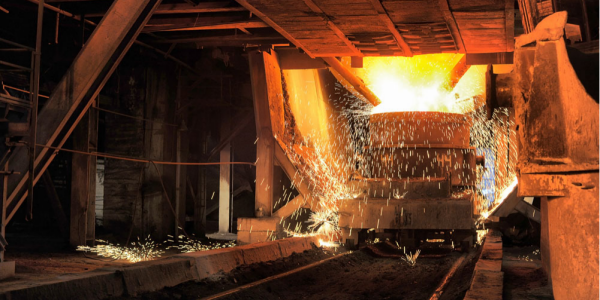
The Effects of Carbon, Sulfur, and Nitrogen Content on Recarburizers and Castings
When recarburizers are used as modifying materials, the carbon, sulfur, and nitrogen elements they contain can significantly affect casting performance.
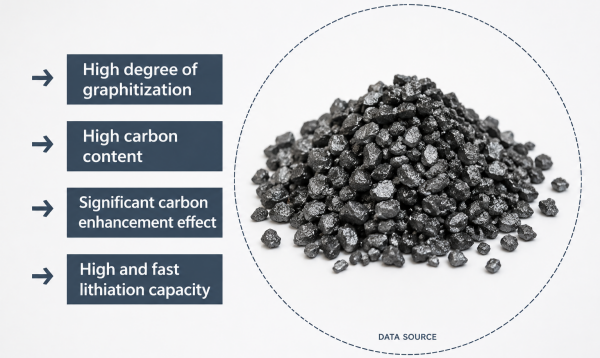
Carbon is the fundamental element in cast iron, and it mainly exists in two forms: one as free carbon graphite, and the other as combined carbon in the form of cementite. Carbon is a strong graphitization-promoting element. Increasing carbon content increases the amount of graphite, but also causes graphite flakes or particles to become coarser. Conversely, reducing carbon content refines graphite particles. The higher the fixed carbon content, the higher the recarburization efficiency, resulting in faster dissolution speed in molten iron and a higher absorption rate. However, if the initial carbon content is excessively high, the absorption speed of the recarburizer may slow down, the absorption quantity may decrease, carbon burn-off may relatively increase, and the absorption rate may decline. Carbon content also directly affects the structure and mechanical properties of castings.
Sulfur in castings can stabilize cementite and inhibit graphitization expansion. Dissolving a small amount of sulfur in ferrite and cementite can reduce the solubility of carbon in liquid cast iron. Most sulfur exists in the form of iron sulfide and other sulfide inclusions. Among them, iron sulfide has a low melting point and is soft and brittle, which reduces the strength of cast iron, increases hardness, and may lead to crack formation.
An appropriate nitrogen content (60–120 mL/m3) can shorten casting length, increase bending degree, blunt the ends, reduce aspect ratio, promote pearlite formation in the matrix, and improve the tensile strength and hardness of castings. However, excessive nitrogen content can easily cause gas porosity defects in castings.
Therefore, with casting quality as the ultimate objective, the carbon, sulfur, and nitrogen content in recarburizers must be strictly controlled.
Feel free to contact us anytime for more information about the Recarburizers market. Our team is dedicated to providing you with in-depth insights and customized assistance based on your needs. Whether you have questions about product specifications, market trends, or pricing, we are here to help.
No related results found




0 Replies