




【Graphite Electrodes】The U.S. Imposes Sky-High Tariffs! 217% Duty on Chinese Products ...

Graphite electrodes are the essential consumables in EAF steelmaking. Due to their outstanding electrical conductivity and excellent high-temperature resistance, they play a critical role in ensuring efficient and stable furnace operation, thereby improving steel production capacity and product quality.
【Graphite Electrodes】The U.S. Imposes Sky-High Tariffs! 217% Duty on Chinese Products — Are All Chinese Orders Wiped Out?
On January 20 (local time), the U.S. Department of Commerce abruptly launched a major trade strike. A "lethal blockade" targeting China's graphite electrode industry was formally implemented — announcing the imposition of a 217.3% anti-dumping duty on graphite electrodes produced in China (HS code 8445.1100), while simultaneously initiating a countervailing duty investigation, citing allegations that "Chinese companies are dumping at low prices and receiving government subsidies, thereby harming U.S. domestic industries."
The tariff rate sets a new record high for similar product sanctions, effectively prohibiting Chinese graphite electrode exports to the United States. Immediately after the announcement, Chinese companies in Hebei, Shanxi, and other regions received cancellation notices from U.S. steel mills. All U.S.-bound orders for 2026 have reportedly been wiped out.
What appears to be forceful trade suppression has, in reality, pushed U.S. steel and new energy enterprises into a supply chain crisis — a case of "hurting oneself while attacking others." Behind the move lies deeper calculations: blocking China's industrial chain and tying trade policy to the 2026 election cycle.
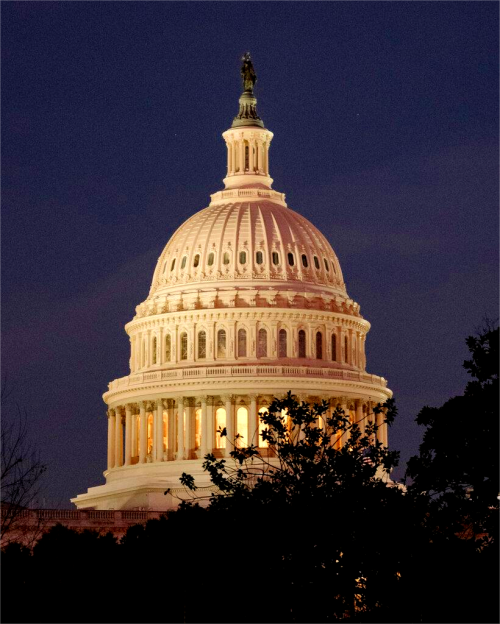
I. Core of the Incident: Sky-High Tariffs Choking Supply, Excuses Detached from Reality
Exorbitant Tariff Escalation, Export Channel Completely Cut Off
The 217.3% anti-dumping duty imposed on Chinese graphite electrodes far exceeds market expectations and can be described as an "extraordinary sanction." Calculations show that graphite electrodes originally costing $3,000 per ton would see export costs surge to over $9,500 per ton after the tariff — completely eliminating price competitiveness and effectively shutting down the export channel to the U.S.
The policy took effect on January 21 and covers all categories of Chinese graphite electrodes, particularly targeting ultra-high power (UHP) and high-power (HP) models required for electric arc furnace (EAF) steelmaking — precisely the core products of China's exports to the U.S.
Weak Justifications, Lacking Factual Basis
The U.S. justification once again centers on "low-price dumping and government subsidies," yet this claim lacks substantive support. Graphite electrodes are critical consumables for steel smelting and new energy battery manufacturing. China holds more than 70% of global export share in this sector due to mature production technologies and a complete industrial chain. The price-performance advantage stems from industrial depth and scale, not subsidies.
By contrast, the U.S. domestic graphite electrode industry is relatively small and cannot meet its own demand. The claim of "harm to domestic industry" serves primarily as a pretext for trade protectionism.
Structural Weakness Exposed, Limited Confidence in Blockade
The U.S. hardline action exposes structural weaknesses in its graphite supply chain. Data show that 59% of natural graphite and 68% of artificial graphite used in the U.S. depend on imports from China. Westwater Resources, the largest domestic graphite producer in the U.S., is projected to have an annual capacity of only 12,500 tons by 2026 — less than one-tenth of China's monthly export volume.
More critically, the U.S. lacks high-purity graphite processing capabilities, especially spherical graphite production required for lithium batteries. The capacity gap is estimated at 85%, and it would take at least five years to establish effective supply.
II. Deeper Motives: Election Calculations and Industrial Anxiety Behind Hegemonic Containment
Core Objective: Contain China's Industrial Chain and Seize Control of Critical Consumables
At its core, the tariff escalation reflects U.S. concerns over China's dominant global position in graphite electrodes. As a "throat-level consumable" for steel and new energy industries, graphite electrodes are strategically significant. China's absolute advantage in this sector is perceived as a threat.
By erecting tariff barriers, the U.S. aims to push Chinese products out of its market, create space for domestic producers, promote reshoring of manufacturing, and curb China's global industrial expansion.
Election Strategy: Appealing to Domestic Interests and Swing-State Voters
With 2026 being a crucial election year, the move also reflects calculated political maneuvering. Graphite electrodes are directly linked to the U.S. steel industry, which is concentrated in key swing states such as Ohio and Pennsylvania. Steelworker votes in these states are critical.
By adopting a tough stance to "protect domestic steel and suppress Chinese products," the administration seeks to win support from industrial capital and labor while projecting a strong image of defending American interests, thereby diverting attention from domestic economic challenges.
Hegemonic Logic: Weaponizing Trade Rules and Ignoring Global Division of Labor
The episode highlights U.S. trade unilateralism and double standards. Despite severe domestic capacity shortages and heavy dependence on Chinese imports, the U.S. invokes anti-dumping and anti-subsidy measures while simultaneously providing extensive support to its own industries.
This approach disregards the global industrial division of labor and China's technological and industrial strengths in graphite electrodes, effectively turning trade rules into tools for geopolitical containment.
III. Chain Reactions: Chinese Corporate Response, U.S. Blowback, and Global Realignment
Chinese Enterprises: Orders Wiped Out, Urgent Strategic Adjustment
The implementation of the tariffs has dealt a severe blow to Chinese graphite electrode producers. Some companies with over 30% of exports destined for the U.S. have seen sudden order cancellations, leading to idle capacity and cash flow pressures. Smaller firms face risks of shutdown or bankruptcy.
In response, companies are accelerating diversification strategies — expanding into emerging markets such as the Middle East and Latin America, upgrading toward higher-value products, reducing price sensitivity, and exploring overseas production bases to circumvent tariff barriers.
U.S. Domestic Impact: Supply Chain Crisis and Rising Costs
The policy has not effectively "protected domestic industry" but instead placed U.S. manufacturers in a difficult position. Graphite electrodes are essential for electric arc furnace steelmaking. With Chinese products exiting the market, U.S. steel mills face shortages and surging procurement costs, driving up steel prices and weighing on broader manufacturing recovery.
Importers have turned to Japan and Germany, but these suppliers have limited capacity and higher prices, increasing production costs that ultimately burden U.S. consumers.
Global Market: Supply Chain Turbulence and Price Transmission
As the world's core supplier of graphite electrodes, China plays a central role in global pricing. The imposition of tariffs has already caused price volatility in international markets. Rising electrode costs may indirectly affect global new energy vehicle and energy storage industries, triggering broader chain reactions.
At the same time, growing uncertainty surrounding U.S. trade policy has prompted countries to accelerate development of their own graphite electrode industries to reduce exposure to unilateral trade actions, accelerating global supply chain restructuring.
From the imposition of a 217% tariff to the loss of Chinese orders and the U.S. supply chain crisis, this trade confrontation reflects both assertiveness and short-term strategic thinking.
Can such extreme tariffs truly foster the rise of a U.S. domestic graphite electrode industry? Can Chinese companies successfully navigate the crisis and maintain their global leadership?
How do you view the U.S. decision to impose such steep tariffs on Chinese graphite electrodes, and what do you believe will be the long-term implications for China–U.S. trade relations and the global steel and new energy landscape?
Feel free to contact us anytime for more information about the EAF Steel market. Our team is dedicated to providing you with in-depth insights and customized assistance based on your needs. Whether you have questions about product specifications, market trends, or pricing, we are here to help.
No related results found




0 Replies