




【Lithium Batteries】In-Depth Analysis: Anode Materials as a Key Component

The rapid growth of the EV and energy storage industries is boosting demand for high-performance lithium batteries, driving the market for quality petroleum coke and synthetic graphite. The quality and particle size of calcined petroleum coke directly affect synthetic graphite performance, especially in anode production.
【Lithium Batteries】In-Depth Analysis: Anode Materials as a Key Component
Compared with cathode materials, the family of anode materials is much smaller. At present, the mainstream anode material is graphite, while the emerging anode material is silicon-based anodes. Below, we will examine the basic properties of these two materials separately.
Characteristics of Graphite Anodes
Graphite, as the most widely used anode material in lithium-ion batteries, firmly holds the “leading position” in the anode material field due to its many advantages. Graphite has a layered crystal structure, and this unique structure allows lithium ions to easily intercalate and deintercalate between each layer. This process is an intercalation reaction, during which the volume of the graphite anode expands and contracts. During charging and discharging, graphite exhibits a relatively stable voltage plateau, thereby ensuring stable battery output voltage. More importantly, graphite resources are abundant, prices are relatively low, and the preparation process is well developed, which makes lithium-ion batteries based on graphite anodes relatively low in cost and highly competitive in the market. As for the disadvantages of graphite, its theoretical specific capacity of 372 mAh/g is probably the only notable drawback.
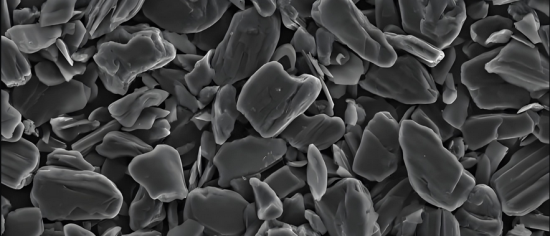
Natural Graphite and Artificial Graphite
Graphite anodes can be further divided into natural graphite and artificial graphite. Natural graphite is directly mined from nature and processed through a series of treatments before being used as a battery anode material. Its advantages include relatively low cost and high specific capacity. However, natural graphite has many surface defects, resulting in low initial coulombic efficiency and relatively poor rate performance. Common modification methods usually involve carbon coating on the surface to improve the initial efficiency.
Artificial graphite is produced through synthetic methods, typically using petroleum coke, pitch coke, and other materials as raw feedstocks, followed by high-temperature graphitization. Artificial graphite has a more ordered structure and fewer surface defects, offering better cycling performance and rate capability. However, the preparation process of artificial graphite consumes a large amount of energy, resulting in relatively higher costs. In addition, because its layered structure is inferior to that of natural graphite, its specific capacity is slightly lower than that of natural graphite.
In practical applications, natural graphite is mainly used in consumer electronics that are more sensitive to cost and require higher battery capacity but have relatively lower requirements for cycling and rate performance, such as smartphones and tablet computers. Artificial graphite, with its excellent cycling stability and rate performance, occupies a dominant position in power batteries and energy storage batteries, where performance requirements are more stringent. For example, electric vehicle batteries must maintain stable performance under frequent charge–discharge cycles, and artificial graphite anodes can effectively meet this demand.
Silicon Anode Materials
As performance requirements for lithium-ion batteries continue to rise, users expect batteries to have higher energy density to achieve longer battery life for electronic devices and longer driving ranges for electric vehicles. Against this backdrop, silicon anode materials have gradually come into focus. Silicon, as an element abundant in the Earth's crust, has an extremely high theoretical specific capacity—up to 4200 mAh/g, more than ten times that of graphite. This means that if the potential of silicon can be fully utilized, the energy density of lithium-ion batteries can be greatly improved.
In addition, silicon has a relatively higher voltage plateau, which reduces the likelihood of lithium plating during charging, significantly enhancing battery safety. Moreover, silicon resources are abundant and relatively low-cost, giving it broad application prospects from both resource and cost perspectives.
However, silicon anodes face a severe challenge—volume expansion. During charging and discharging, silicon undergoes an alloying reaction with lithium ions. When lithium ions are inserted into silicon, the volume of silicon expands dramatically, with an expansion rate exceeding 300%. Similar to a balloon rapidly inflating during continuous filling, such drastic volume changes cause severe structural damage to silicon anode materials, leading to pulverization and detachment. As a result, the electrode material loses electrical contact with the current collector, causing rapid capacity decay and significantly shortened cycle life.
To overcome the volume expansion issue of silicon anodes, researchers have proposed a series of solutions. Currently, the main approaches include nanostructuring, the fabrication of silicon-based composite materials, and surface modification of silicon. Nanostructuring involves preparing silicon into nanoscale particles or nanowires, which increases the specific surface area, alleviates stress caused by volume expansion, shortens lithium-ion diffusion paths, and improves charge–discharge performance. For example, when silicon is fabricated into nanowires, its structure can better accommodate volume changes, resulting in significantly improved cycling performance.
The fabrication of silicon-based composite materials involves combining silicon with other materials, such as forming silicon–carbon composites. Carbon materials offer good electrical conductivity and structural stability, providing mechanical support for silicon, buffering its volume expansion, and improving overall conductivity. For instance, coating silicon with a carbon layer to form a core–shell silicon–carbon composite effectively enhances silicon anode performance.
Surface modification of silicon is also an effective method. By introducing a protective layer on the silicon surface, such as oxides or nitrides, side reactions between silicon and the electrolyte can be suppressed, reducing active material loss and improving battery cycle life.
Although silicon anodes still face several challenges, significant progress has already been made. Silicon-based anode materials have begun to be applied in consumer batteries, and some companies have started to deploy them in certain electric vehicle models. Although the current application scale remains relatively small, the future development potential is enormous.
In addition to graphite and silicon anode materials, lithium metal is also one of the candidate anode materials. Its theoretical specific capacity reaches as high as 3860 mAh/g. However, during charge–discharge cycles, severe lithium dendrite growth can occur, which may pierce the separator and cause internal short circuits,leading to serious safety hazards. Nevertheless, lithium metal anodes or anode-free technologies represent an ideal solution for lithium-ion batteries.
Future Outlook
In the future lithium-ion battery market, graphite anodes, with their mature technology and stable performance, will continue to occupy an important position for a considerable period. Especially in energy storage applications that emphasize cost control and safety, as well as in mid- to low-end consumer electronics where performance requirements are relatively less demanding, graphite anodes will continue to demonstrate their advantages.
Silicon anodes, as highly promising next-generation anode materials, are expected to steadily expand their market share as technical challenges are gradually overcome. In the electric vehicle sector, as demand for longer driving ranges continues to rise, silicon anodes are likely to become a key solution for increasing battery energy density. When paired with high-nickel cathode materials and other advanced technologies, silicon anodes can help build higher-performance power battery systems, further driving the development of the electric vehicle industry.
Feel free to contact us anytime for more information about the Anode Material market. Our team is dedicated to providing you with in-depth insights and customized assistance based on your needs. Whether you have questions about product specifications, market trends, or pricing, we are here to help.
No related results found




0 Replies