




【Graphite Products】Explaining 45 Common Graphite Products in One Sentence Each

Calcined petroleum coke, with its high carbon content, low sulfur, and low impurities, plays a vital role in modern manufacturing, especially in the aluminum and steel industries.
【Graphite Products】Explaining 45 Common Graphite Products in One Sentence Each
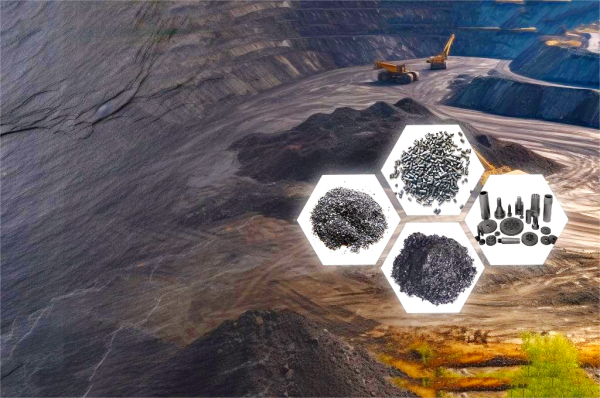
Graphite Ore
1. Graphite
One of the allotropes of carbon, with a hexagonal or trigonal crystal system and a layered structure. Note: Chemical formula: C. Classified into flake graphite and microcrystalline graphite based on flake size.
2. Natural Graphite
A naturally occurring graphite mineral with a black color and metallic luster. Classified into flake graphite and microcrystalline graphite based on appearance and flake size.
3. Flake Graphite
Naturally occurring crystalline graphite with a flake-like or scaly morphology. Note: Also known as crystalline graphite. It has excellent properties such as high temperature resistance, electrical conductivity, thermal conductivity, lubrication, plasticity, and resistance to acids and alkalis.
4. Microcrystalline Graphite
An aggregate composed of natural graphite crystals with particle size less than 1 μm. Note: Also known as amorphous graphite or cryptocrystalline graphite. It is gray-black or steel-gray in color, has metallic luster, feels smooth, easily stains hands, and usually has a graphitization degree greater than 55.0%.
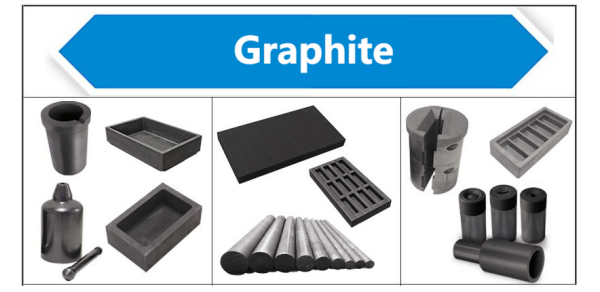
Graphite Products
1. Graphite Powder
The powdered material obtained from graphite through physical or chemical processing.
2. Graphite Concentrate Powder
A high-purity graphite powder obtained through processes such as crushing, grinding, flotation, classification, and purification.
3. High-Purity Flake Graphite
Flake graphite with fixed carbon content greater than or equal to 99.90%.
4. High-Purity Microcrystalline Graphite
Microcrystalline graphite with fixed carbon content greater than or equal to 99.90%.
5. High-Carbon Flake Graphite
Flake graphite with fixed carbon content greater than or equal to 94.00% and less than 99.90%.
6. High-Carbon Microcrystalline Graphite
Microcrystalline graphite with fixed carbon content greater than 95.00% and less than 99.90%.
7. Medium-Carbon Flake Graphite
Flake graphite with fixed carbon content greater than or equal to 80.00% and less than 94.00%.
8. Medium-Carbon Microcrystalline Graphite
Microcrystalline graphite with fixed carbon content greater than or equal to 80.00% and less than or equal to 95.00%.
9. Low-Carbon Flake Graphite
Flake graphite with fixed carbon content greater than or equal to 50.00% and less than 80.00%.
10. Low-Carbon Microcrystalline Graphite
Microcrystalline graphite with fixed carbon content greater than or equal to 65.00% and less than 80.00%.
11. Expandable Graphite
Graphite that expands instantaneously when exposed to high temperature after special treatment.
12. Expanded Graphite
A loose, porous, worm-like material obtained from natural graphite through oxidation intercalation and rapid thermal expansion.
13. Flexible Graphite
A flexible graphite material made from natural flake graphite through intercalation treatment, high-temperature expansion, and mechanical pressing.
14. Expanded Graphite Sheets
Graphite sheets formed by molding or rolling expanded graphite.
15. Ultra-Thin Graphite Paper
Graphite paper with a thickness less than 0.1 mm.
16. Graphite Single Crystal
Graphite in which the crystallographic orientation is consistent throughout the interior (except for deviations caused by crystal defects), exhibiting intrinsic anisotropy.
17. Graphene
A two-dimensional honeycomb crystal material composed of a single layer of carbon atoms arranged in an sp² hybridized structure, including monolayer, bilayer, and few-layer graphene.
18. Monolayer Graphene
A two-dimensional carbon material composed of a single layer of carbon atoms arranged periodically in a hexagonal honeycomb (benzene ring-like) structure.
19. Bilayer Graphene
A two-dimensional carbon material composed of two layers of carbon atoms stacked in different configurations, each arranged in a hexagonal honeycomb structure.
20. Few-Layer Graphene
A two-dimensional carbon material composed of 3 to 10 layers of carbon atoms stacked in different configurations, each arranged in a hexagonal honeycomb structure.
21. Nano Graphite
Graphite material with at least one dimension in the nanoscale range (1 nm to 100 nm).
22. Graphite Fiber
A fiber material with carbon content >99%, produced from organic fibers as precursors through pre-oxidation, carbonization, and high-temperature graphitization, exhibiting a highly graphitized crystal structure.
23. Spherical Graphite
Graphite products with ellipsoidal shapes of different particle sizes, produced from high-carbon natural flake graphite through surface modification.
24. Graphite Emulsion
An emulsion-type graphite product formed by uniformly dispersing graphite particles in a liquid medium.
25. Colloidal Graphite
A colloidal product formed by uniformly dispersing graphite powder in a liquid medium at a certain proportion.
26. Isotropic Graphite
Graphite material that exhibits highly consistent physical properties (such as mechanical, thermal, and electrical properties) in all directions.
27. Isostatic Graphite
Graphite material produced using isostatic pressing.
28. Nuclear Graphite
High-purity graphite material used in the nuclear industry.
29. Synthetic Graphite
A material composed of graphitic carbon, obtained by graphitizing non-graphitic carbon at temperatures above 2500 K. Note: Also known as artificial graphite. Typically produced using petroleum coke as aggregate and coal tar pitch as binder.
An electrode material made from petroleum coke and needle coke as raw materials, with coal tar pitch as binder, and processed through graphitization.
A crucible made primarily from graphite or a mixture of graphite and other materials.
32. Impermeable Graphite
Graphite material that is impermeable to fluids such as gases and liquids.
33. Silicon-Impregnated Graphite
Graphite material produced by impregnating molten silicon into graphite under high temperature and pressure.
34. Fluorinated Graphite
A graphite compound produced by direct reaction between graphite and fluorine.
35. Reconstituted Flake Graphite
Flake graphite produced by physically pressing fine flake graphite (particle size <45 μm) into larger flakes (>75 μm).
36. Specialty Graphite
Graphite products with special properties and applications, such as high strength, high density, and high purity.
37. Porous Graphite
Graphite material with a controllable pore structure, prepared by introducing uniformly distributed micro- or nano-scale pores into the graphite matrix.
38. High Thermal Conductivity Graphite
Graphite material with a directional crystalline structure, produced through high-temperature graphitization (2500°C–3000°C).
39. High Thermal Conductivity Graphite Film
A two-dimensional thin-layer graphite material with ultra-high in-plane thermal conductivity and excellent flexibility, produced through high-temperature graphitization processes.
40. Regular Power Graphite Electrode
A conductive material mainly used in electric arc furnace steelmaking and industrial silicon smelting, capable of conducting current (allowable current density below 17 A/cm²) and generating high-temperature arcs to melt charge materials.
41. High Power Graphite Electrode
A graphite electrode designed for high current density and high-power electric arc furnaces, with allowable current density of 18–25 A/cm².
42. Ultra High Power Graphite Electrode
A graphite electrode designed for ultra-high-power steelmaking electric arc furnaces and extreme smelting conditions, with allowable current density greater than 25 A/cm².
43. Anti-Oxidation Coated Graphite Electrode
A coated electrode made by applying an oxidation-resistant coating on the surface of a graphite electrode body.
44. Graphite Anode
Graphite material used as the anode (where oxidation reactions occur) in electrochemical systems such as electrolysis and batteries.
45. Graphite Cathode
Graphite material used as the cathode (where reduction reactions occur) in electrochemical systems such as electrolytic cells and batteries.
Source: Vocabulary of Non-metallic Mineral Products — Part 4: Graphite
Feel free to contact us anytime for more information about the artificial graphite market. Our team is dedicated to providing you with in-depth insights and customized assistance based on your needs. Whether you have questions about product specifications, market trends, or pricing, we are here to help.
No related results found




0 Replies