




【In-Depth Science】A Complete Guide to Battery Anode Materials

The rapid growth of the EV and energy storage industries is boosting demand for high-performance lithium batteries, driving the market for quality petroleum coke and synthetic graphite. The quality and particle size of calcined petroleum coke directly affect synthetic graphite performance, especially in anode production.
【In-Depth Science】A Complete Guide to Battery Anode Materials
Battery anode materials are one of the key components that determine battery performance. Their primary function is to store and release lithium ions (or sodium ions, etc.) during charge and discharge processes, enabling the storage and release of electrical energy. With the rapid development of new energy vehicles, energy storage systems, and portable electronic devices, demand for battery anode materials with higher energy density, longer cycle life, and lower cost continues to grow. As a result, the research and development of new anode materials has become a major focus in the field of battery technology.
In lithium-ion batteries, the traditional anode material is mainly graphite. Graphite has a relatively large specific surface area and good electrical conductivity, allowing it to effectively store lithium ions. However, its theoretical capacity is relatively low, about 372 mAh/g, which limits its application in high–energy-density batteries. In addition, although graphite undergoes relatively small volume expansion during cycling, its cycle stability is still constrained, especially under high-rate charge and discharge conditions, where structural damage and capacity fading are more likely to occur.
In contrast, silicon-based materials (such as silicon nanowires and silicon–carbon composites) have a much higher theoretical capacity of about 1600 mAh/g, more than four times that of graphite. However, silicon undergoes significant volume expansion during cycling (up to 300%), which can lead to electrode structural failure and negatively affect battery cycle life and safety. Therefore, addressing the volume expansion issue of silicon-based materials remains one of the key research challenges.
1. Silicon-Based Anode Materials
Silicon-based materials have attracted considerable attention due to their high capacity and relatively low cost. Studies have shown that introducing fluoroethylene carbonate (FEC) as an electrolyte additive can significantly improve the cycling performance of silicon nanowire (SiNW) anodes. FEC promotes the formation of a thinner and denser solid electrolyte interphase (SEI) film, thereby reducing irreversible capacity loss and enhancing cycling stability. In addition, silicon–carbon composite materials (such as silicon–graphite composites) have been widely studied to combine the high capacity of silicon with the structural stability of graphite.
2. Lithium Metal Anode Materials
Lithium metal anodes are regarded as an ideal choice for next-generation high–energy-density batteries. Lithium metal has an extremely high theoretical capacity of 3860 mAh/g, far exceeding that of graphite and silicon-based materials. However, lithium metal is prone to dendrite growth during cycling, which can cause internal short circuits and even fires or explosions, making safety a critical issue. To address this challenge, researchers are exploring various strategies to enhance the stability of lithium metal anodes, including artificial SEI layers, three-dimensional porous structures, and ionic liquid electrolytes.
3. Hard Carbon Anode Materials
In sodium-ion batteries, the larger ionic radius of sodium ions makes it difficult for traditional graphite to effectively intercalate sodium. As a result, alternative anode materials are required. Hard carbon has become the preferred anode material for sodium-ion batteries due to its good sodium storage capability and relatively high cycling stability. Its structure contains abundant micropores and mesopores, providing a large specific surface area that facilitates sodium ion insertion and extraction. In addition, hard carbon has relatively low production costs and is suitable for large-scale manufacturing.
4. Other Emerging Anode Materials
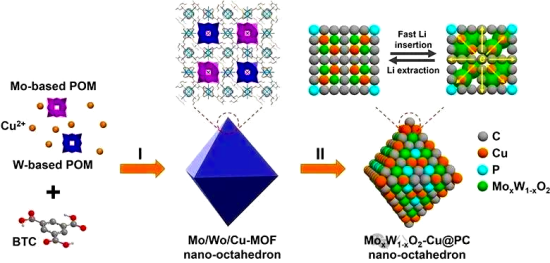
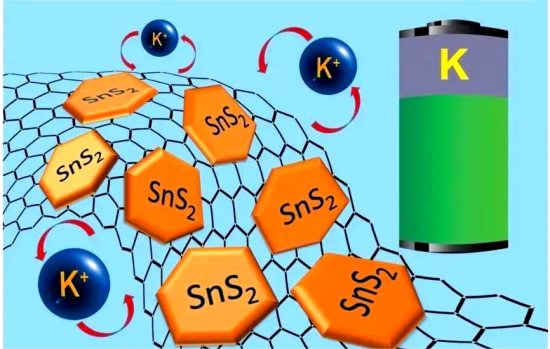
Beyond the materials mentioned above, researchers are also exploring a variety of emerging anode materials, such as tin-based materials (SnS₂, SnO₂), sulfides (SnS₂, SnSe), and metal–organic frameworks (MOFs). These materials can exhibit excellent electrochemical performance under certain conditions, but they still face challenges such as high production costs and poor cycling stability, which require further optimization and research.
Solid-state batteries are considered an important future direction in battery technology due to their higher safety, higher energy density, and longer cycle life. In solid-state batteries, the choice of anode material is particularly critical because it directly contacts the solid electrolyte and must exhibit good chemical stability and mechanical compatibility. Currently, anode materials for solid-state batteries mainly fall into three categories: lithium metal, carbon-based materials, and oxides.
Among them, lithium metal anodes offer the highest energy density and the lowest electrochemical potential, making them an ideal long-term solution. However, interfacial reactions between lithium metal and solid electrolytes are complex, and dendrite formation can still occur, adversely affecting battery performance. Therefore, researchers are developing new solid electrolytes and interfacial engineering strategies to improve the stability of lithium metal anodes. Carbon-based materials (such as graphite, hard carbon, soft carbon, carbon nanotubes, and graphene) are also widely used in solid-state batteries. Although graphite has limited energy density, its structural stability makes it suitable for short- to medium-term applications. Hard carbon and soft carbon, with good lithium storage capability and high cycling stability, are considered important candidates for solid-state battery anodes.
The performance of anode materials depends not only on their chemical composition but also on their microstructure, morphology, and surface chemistry. Therefore, advanced characterization techniques play a crucial role in anode material research. Common techniques include scanning electron microscopy (SEM), transmission electron microscopy (TEM), X-ray diffraction (XRD), X-ray photoelectron spectroscopy (XPS), and Fourier transform infrared spectroscopy (FTIR). For example, SEM and TEM can be used to observe microstructure and morphology, determining whether materials are uniformly distributed or contain cracks or agglomeration. XPS and FTIR help analyze surface chemical composition and functional groups, aiding in the understanding of electrochemical behavior. In addition, electrochemical tests such as cyclic voltammetry and galvanostatic charge–discharge testing are essential for evaluating anode material performance.
With the rapid development of new energy vehicles and energy storage systems, demand for batteries with higher energy density, longer cycle life, and lower cost continues to rise. At present, silicon-based anode materials have already been applied in some high-end smartphone batteries. For example, the "Qinghai Lake Battery" used in the Honor Magic5 series adopts silicon–carbon anode technology, achieving higher energy density and longer battery life. Meanwhile, sodium-ion batteries, benefiting from abundant raw materials and low cost, are expected to be widely used in large-scale energy storage systems, with hard carbon and soft carbon as their main anode materials.
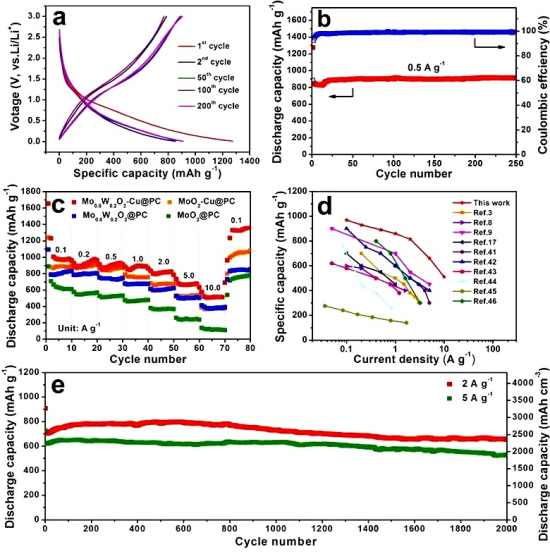
In the future, with advances in materials science and manufacturing technologies, new anode materials such as lithium metal, sulfides, and MOFs are expected to play important roles in power batteries and energy storage systems. In particular, in the field of solid-state batteries, lithium metal anodes and novel carbon materials will become key research hotspots, driving battery technology toward higher performance and broader applications.
Battery anode materials are one of the decisive factors influencing battery performance. Traditional graphite anodes are mature but limited by low energy density; silicon-based materials offer high energy density but suffer from volume expansion issues; lithium metal anodes provide the highest energy density but face significant safety challenges; and hard carbon anodes perform well in sodium-ion batteries and are suitable for large-scale production. Looking ahead, continuous progress in materials science and manufacturing technologies will enable new anode materials to play an increasingly important role in power batteries and energy storage systems, pushing battery technology toward higher performance and wider application.
Feel free to contact us anytime for more information about the Anode Material market. Our team is dedicated to providing you with in-depth insights and customized assistance based on your needs. Whether you have questions about product specifications, market trends, or pricing, we are here to help.
No related results found




0 Replies