




【Graphitization】Mainstream Processes and Key Technical Points

The rapid growth of the EV and energy storage industries is boosting demand for high-performance lithium batteries, driving the market for quality petroleum coke and synthetic graphite. The quality and particle size of calcined petroleum coke directly affect synthetic graphite performance, especially in anode production.
【Graphitization】Mainstream Processes and Key Technical Points
I. Graphitization
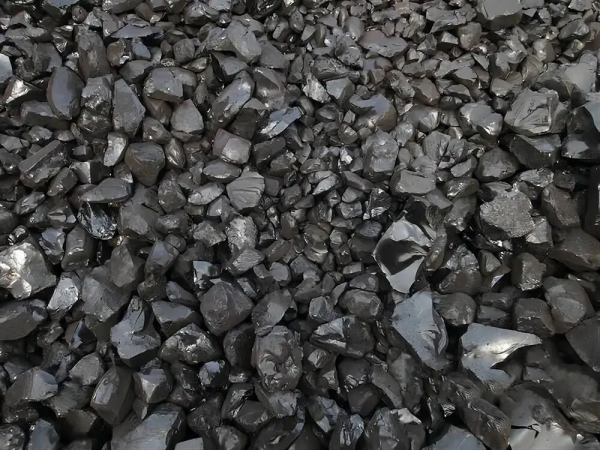
The graphitization process makes full use of resistance heating to raise carbonaceous materials to 2300–3000°C, converting the amorphous, disordered carbon structure into an ordered graphite crystalline structure. The energy for graphite crystal transformation and atomic rearrangement comes from high-temperature heat treatment. As the heat-treatment temperature increases, the interlayer spacing of graphite gradually decreases, generally reaching 0.343–0.346 nm. The change becomes significant when the temperature reaches 2500°C, and gradually slows at 3000°C, until the entire graphitization process is completed.
Artificial graphite anode materials are produced through high-temperature graphitization treatment, which successfully converts carbon structures into graphite structures, thereby enabling them to perform the corresponding functions required for lithium-ion battery anodes.
II. Mainstream Graphitization Furnace Types and Processes for Anode Materials
At present, the furnace types used in the graphitization of anode materials mainly include Acheson graphitization furnaces, internal series graphitization furnaces, box-type graphitization furnaces, and continuous graphitization furnaces. Among them, the most widely used is the Acheson graphitization furnace, with a small number of internal series graphitization furnaces also in use.
Box-type graphitization furnaces and continuous graphitization furnaces are new furnace types developed in recent years. Box-type graphitization furnaces have developed rapidly, mainly through modification of Acheson furnaces and some newly built units. Continuous graphitization furnaces are all newly built and are still in the trial stage; their furnace structures and processes are not yet fully mature, and it will take time before they can be widely adopted. Because there are significant differences in charging methods, production processes, and auxiliary materials among various furnace types, the quality of anode materials produced by different furnaces also shows obvious differences.
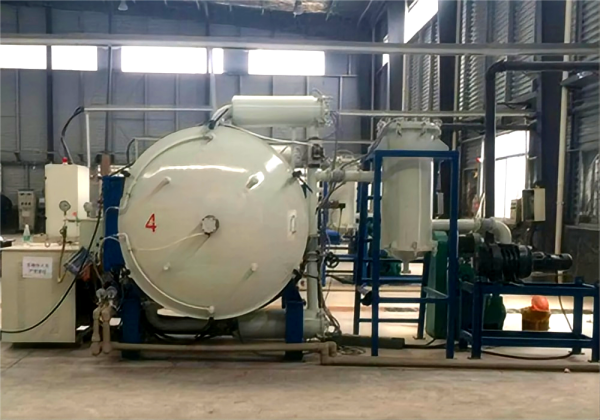
The Acheson furnace loads carbonaceous anode materials into single-hole crucibles (one-hole crucibles), then places the crucibles into the graphitization furnace, with resistance materials inserted between them as electrical resistors. Insulation materials are placed on both sides and on the top, and graphitization is completed by supplying electric power.
The internal series graphitization furnace loads carbonaceous anode materials into multi-hole crucibles (9-hole crucibles), then connects the crucibles in series end-to-end and loads them into the graphite furnace. Insulation materials are placed on both sides and on the top, and graphitization is completed by supplying electric power.
The box-type graphitization furnace loads carbonaceous anode materials directly into a large box that has been pre-installed with carbon plates or graphite plates. Carbonaceous or graphite cover plates are then added as resistors. Insulation materials are placed on the top and both sides, and graphitization is completed by supplying electric power.
The continuous graphitization furnace continuously feeds carbonaceous anode materials into the graphitization furnace chamber, where they undergo high-temperature graphitization and are then cooled and discharged.
III. Key Technical Points in the Processes of Different Graphitization Furnaces
The processing of anode materials mainly includes two critical stages: granulation and graphitization, both of which have high technical barriers. Through graphitization, the specific capacity, initial coulombic efficiency, specific surface area, tap density, electrical conductivity, and chemical stability of anode materials can be significantly improved. Therefore, proper control and mastery of the graphitization process are crucial for ensuring anode material quality. Since the processes of box-type furnaces and continuous graphitization furnaces are not yet fully mature, the following section focuses on the key process points of Acheson furnaces and internal series graphitization furnaces.
(1) Matching of Volatile Content During Charging
During the period when the furnace temperature is between 200–1000°C, a large amount of volatiles will be released from the anode materials in the furnace. If these volatiles are not discharged in time, accumulation may occur, potentially causing furnace blow-outs and safety accidents. When a large amount of volatiles is released, incomplete combustion will generate large quantities of black smoke, resulting in environmental pollution or environmental protection incidents. Therefore, the following points must be noted during charging:

① When loading anode materials into the furnace, they must be reasonably matched according to their volatile content, so as to avoid excessive concentration and concentrated release of high-volatile materials during power-on;
② Appropriate vent holes must be set in the top insulation layer to allow effective discharge of volatiles;
③ When designing the power-supply curve, full consideration must be given to the stage of concentrated volatile release, and the curve should be appropriately slowed to allow volatiles to be released slowly and fully combusted;
④ Auxiliary materials should be reasonably selected to ensure proper particle size distribution, and the proportion of 0–1 mm fines in auxiliary materials should be reduced, generally limited to ≤10%.
(2) Uniform Furnace Resistance During Charging
When the distribution of anode materials and resistance materials in the furnace is uneven, the current will flow through areas with lower resistance, causing current deviation and affecting the overall graphitization performance of the entire furnace. Therefore, the following points must be noted during charging:
① Resistance materials should be loaded in a continuous line from the head to the tail of the furnace chamber, avoiding concentration of fine or coarse particles;
② When new and old crucibles are loaded in the same furnace, they must also be reasonably matched; it is forbidden to load one layer of new crucibles and one layer of old crucibles;
③ Avoid resistance materials penetrating into the side-wall materials.
(3) Cooling and Discharging
① During the cooling process after graphitization, water quenching must not be used for forced cooling. Instead, grab buckets or suction devices should be used to remove the materials layer by layer for natural cooling.
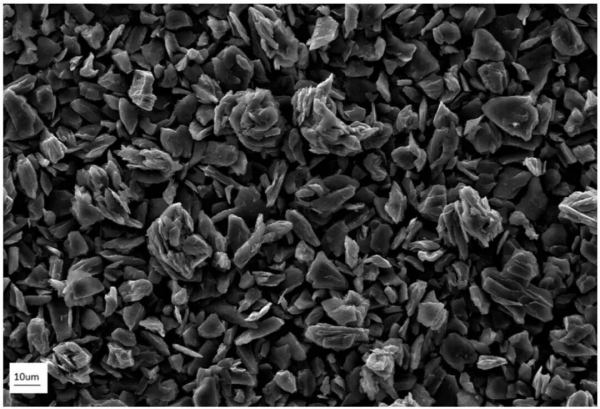
② It is optimal to discharge the anode material crucibles at around 150°C. If the crucibles are removed too early, excessive temperature will cause oxidation of the anode material, increasing the specific surface area, and will also lead to oxidation and damage of the crucibles, increasing costs. If removed too late, the anode powder will also be oxidized, increasing the specific surface area, extending the production cycle, and increasing costs.
③ At the high temperature of 3000°C during graphitization, all elements other than carbon are gasified and removed. However, a small amount of impurities will still be adsorbed on the surface of the anode during cooling. As a result, a rough, hard shell will form on the surface of the crucibles when they are discharged. Materials with high ash content and high volatile content will form more of this hard shell. This is also why low-ash and low-volatile auxiliary materials are selected.
④ The hard-shell material differs significantly in performance from qualified anode materials. Therefore, when removing the crucibles, a 1–5 mm thick hard-shell layer should be knocked off in advance and stored separately. The qualified material with a smooth surface should be collected normally, packed into ton bags, stored, and shipped to customers.
Feel free to contact us anytime for more information about the Anode Material market. Our team is dedicated to providing you with in-depth insights and customized assistance based on your needs. Whether you have questions about product specifications, market trends, or pricing, we are here to help.
No related results found




0 Replies