




【Graphite Electrode】Another Type of Electrode Consumption Material

【Graphite Electrode】Another Type of Electrode Consumption Material
In certain fields, electrode consumption materials have undergone changes. The "Technology for Replacing Electrode Paste with Carbon Electrodes for Ferroalloy Smelting" has been included in the national key energy-saving and low-carbon technology promotion catalog, and has been successfully applied in industrial enterprises in Shandong, Sichuan, and other regions.
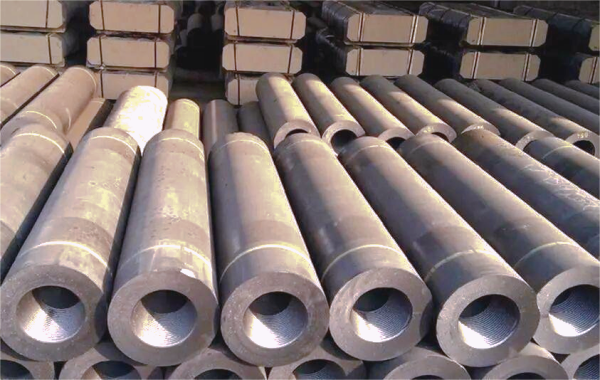
I. What is a Graphite Electrode
A graphite electrode refers to a high-temperature-resistant graphite conductive material made from petroleum coke and needle coke as aggregates, and coal tar pitch as a binder, through processes such as raw material calcination, crushing and grinding, batching, kneading, forming, baking, impregnation, graphitization, and machining.
It should be specifically noted that graphite electrodes and electrode paste are two completely different products. Graphite electrodes undergo full baking and graphitization, where carbon atoms are arranged into a graphite crystal structure. In contrast, electrode paste is not baked, and its carbon atoms remain in an amorphous state. Therefore, there are significant differences between the two in terms of conductivity, thermal conductivity, and other properties.
II. Structure of Graphite Electrode Materials
In graphite materials, each carbon atom bonds with three surrounding carbon atoms through covalent bonds, forming a honeycomb-like hexagonal network structure. The covalent bonds within the hexagonal layers are extremely strong, giving the material high strength; while the interlayer forces are weak, allowing layers to slide relative to each other, which provides good self-lubrication.
More importantly, each carbon atom releases a free electron, and these electrons can move freely between layers — this is the source of the electrical conductivity of graphite electrodes.
After graphitization at high temperatures of 2800–3000°C, carbon atoms rearrange to form graphite microcrystals. The orientation and size of these microcrystals directly affect the electrode's electrical conductivity, thermal expansion coefficient, and thermal shock resistance. (Ultra-high power graphite electrode production requires the addition of needle coke. This type of coke has a special fibrous structure, which results in highly aligned microcrystals after graphitization, giving the electrode lower resistivity and superior thermal stability.)
Finished graphite electrodes are cylindrical, with threaded holes (internal threads) at both ends. Multiple electrodes are connected using graphite nipples of the same material to achieve the required length. The electrode surface is precision-machined to ensure good contact with the furnace copper holders, reducing electrical resistance losses.
III. Material Properties of Graphite Electrodes
Graphite electrodes have excellent electrical conductivity. According to the technical promotion catalog, carbon electrodes (a type of graphite electrode) can achieve a resistivity as low as 33.6 μΩ/m. Low resistivity means lower energy consumption during current flow, reduced electrical losses, energy savings, and higher smelting efficiency.
Graphite electrodes can withstand extremely high arc temperatures (above 3000°C) in electric arc furnaces. They have a low thermal expansion coefficient, strong thermal shock resistance, maintain good mechanical strength at high temperatures, and possess good oxidation resistance and slag corrosion resistance. For ultra-high power applications, surface anti-oxidation coatings can further extend service life.
IV. Advantages of Graphite Electrodes in Certain Fields
Electrode paste is a "self-baking electrode," also known as a Söderberg electrode. It is not pre-baked during production. During use, it relies on the heat generated by the submerged arc furnace to sinter and form inside the electrode casing, being consumed while being baked in the furnace.
Graphite electrodes are completely different. They have already undergone full baking and graphitization processes, and during use, they only need to be connected via threaded joints for immediate operation.
According to the national key energy-saving and low-carbon technology promotion catalog, the advantages of replacing electrode paste with graphite electrodes are mainly reflected in the following aspects:
First, graphite electrodes eliminate the self-baking process, thereby avoiding large amounts of pitch smoke and harmful volatiles generated during in-furnace baking of electrode paste, significantly improving the working environment.
Second, graphite electrodes have strong conductivity and low consumption, which can reduce power consumption per unit product.
Third, graphite electrodes have a stable structure and high mechanical strength, effectively reducing production stoppages caused by "soft breaks" and "hard breaks," thus improving production stability and equipment utilization.
It should be noted that graphite electrodes cannot completely replace electrode paste in all scenarios. According to the technical promotion catalog, this substitution technology is mainly applicable to medium and large submerged arc furnaces (for smelting ferroalloys, calcium carbide, yellow phosphorus, etc.), while electrode paste still has application space in small furnaces or specific processes. However, the overall trend is clear: stricter environmental requirements and increasing pressure for energy saving and carbon reduction are driving more enterprises to shift from electrode paste to graphite electrodes.
V. Manufacturing Process of Graphite Electrodes
Core raw materials:
Petroleum coke — the main carbon source; ordinary power electrodes can use petroleum coke with a small amount of pitch coke.
Needle coke — used for high-power and ultra-high-power electrodes, featuring low thermal expansion coefficient and high conductivity.
Coal tar pitch — acts as a binder, bonding carbon particles together.
Recycled graphite and used electrode materials — used to reduce costs.
Crushing and grinding: Petroleum coke or needle coke is crushed and ground into fine powder.
Screening: Oversized particles are removed to ensure uniform particle size.
Batching: Components are weighed according to specific proportions.
Kneading: The pitch binder is heated to a liquid state (about 150–200°C) and thoroughly mixed with carbon aggregates to form a uniform "dough-like" mixture.
Forming: Pressure is applied to shape the mixture. Different forming methods (vibration molding, extrusion molding, isostatic pressing) are selected based on application requirements.
Primary baking: The formed electrode is placed in a furnace and slowly heated to about 1000°C, maintained for days or weeks to carbonize the pitch binder and form a carbon skeleton that firmly bonds the particles. (The heating rate must be slow to prevent cracking due to internal stress.)
Impregnation: Even after baking, the electrode contains micropores. Impregnation reduces porosity and increases density. The baked electrode is placed in a high-pressure vessel, vacuumed to remove internal gases, then infused with liquid coal tar pitch under pressure. A second baking carbonizes the impregnated pitch. For high-power electrodes, this process may be repeated multiple times to minimize porosity.
High-temperature graphitization: Conducted at 2800–3000°C under a reducing or inert atmosphere to rearrange carbon atoms into a regular graphite crystal structure.
Cooling: After graphitization, the electrode must be gradually cooled over several days to prevent cracking from thermal stress.
Machining: The electrode blank undergoes precision machining — rough turning to approximate diameter, followed by fine turning to achieve strict tolerances and smooth surface.
Drilling and threading: Internal threads are machined at both ends for nipple connection.
Surface treatment: Optional anti-oxidation coatings can be applied to extend service life.
Testing: Includes conductivity testing, appearance inspection, and mechanical strength evaluation.
VI. Application Scenarios of Graphite Electrodes
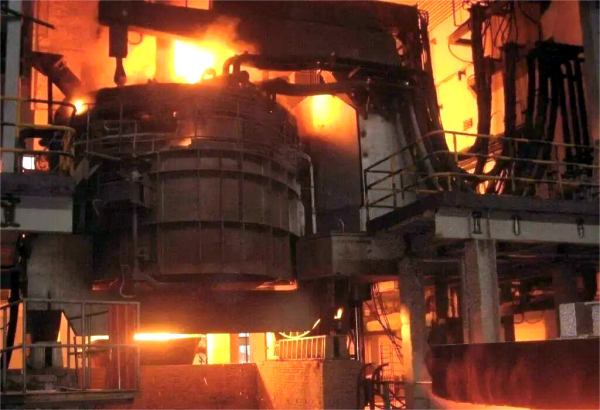
Electric arc furnace (EAF) steelmaking: The primary application, accounting for 70%–80% of total graphite electrode consumption. Graphite electrodes conduct current into the furnace, generating arcs between the electrode tip and the charge, using high temperatures (above 3000°C) to melt scrap steel. In China, EAF steel accounts for about 18% of crude steel production.
Submerged arc furnaces: The main field where graphite electrodes replace electrode paste. The lower part of the electrode is embedded in the charge, generating arcs within the material layer while utilizing the resistance heating of the charge itself. Replacing electrode paste with graphite electrodes saves electricity and reduces pollutant emissions.
Other applications: Graphitization furnaces for producing graphite products, glass melting furnaces, silicon carbide electric furnaces, etc. (In these applications, electrodes are not continuously consumed, and usage is relatively small.)
VII. Outlook of the Carbon-Based Industry Chain
In some application fields, electrode paste is gradually being replaced by graphite electrodes, revealing the core logic of industrial material upgrading — energy saving, environmental protection, and efficiency (lower energy consumption, reduced environmental burden, and higher utilization efficiency).
With the development of the industrial chain and the requirements of high-quality economic development in the new era, the transition from high-energy-consuming processes to green processes is an inevitable direction of industrial development.
Graphite electrode production is a typical heavy-investment, long-cycle industry. However, its core raw materials are the same as those used in electrode paste production, and its processes are interconnected with many segments of the industrial chain, such as graphitization, impregnation, and precision machining. Continuous improvement in these process steps can enhance technological innovation and product competitiveness, enabling mastery of emerging technologies and promoting the healthy development of the industrial chain.
Feel free to contact us anytime for more information about the Graphite Electrode market. Our team is dedicated to providing you with in-depth insights and customized assistance based on your needs. Whether you have questions about product specifications, market trends, or pricing, we are here to help.
No related results found




0 Replies