




【Anode】Understanding Lithium Battery Anode Material — Artificial Graphite

The rapid growth of the EV and energy storage industries is boosting demand for high-performance lithium batteries, driving the market for quality petroleum coke and synthetic graphite. The quality and particle size of calcined petroleum coke directly affect synthetic graphite performance, especially in anode production.
【Anode】Understanding Lithium Battery Anode Material — Artificial Graphite
The core power behind the mobile phones we use every day and the new energy vehicles we drive comes from lithium batteries. Inside these batteries, there is an "invisible hero" — artificial graphite. As the anode material, it plays the role of an "energy warehouse" in the battery, directly determining how much energy the battery can store, how long it lasts, and how fast it can be charged. Today, let's take a simple and easy-to-understand look at artificial graphite, the anode material of lithium batteries.
Part 01
What is Artificial Graphite? — A Carbon Material "Forged" by Humans
Artificial graphite is a graphite material synthesized from carbon materials such as petroleum coke and needle coke through multiple high-temperature processing steps. Simply put, it is a "high-performance version" of carbon materials after being "tempered and refined."
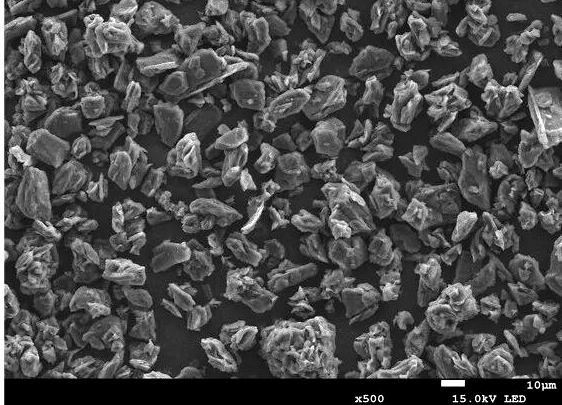
Compared with natural graphite, which is a gift from nature with a highly ordered crystal structure (like a perfectly layered "thousand-layer cake"), it contains more impurities and has irregular particle morphology, resulting in greater batch performance fluctuations. Artificial graphite, on the other hand, is like carefully formulated "concrete" — made by sintering coke particles and binders at high temperatures. It has a dense structure, controllable particle morphology, and excellent batch consistency. These characteristics make it an ideal choice for lithium battery anodes.
Artificial graphite SEM image
Part 02
How is Artificial Graphite Made? — Transformation from Raw Materials to Anode
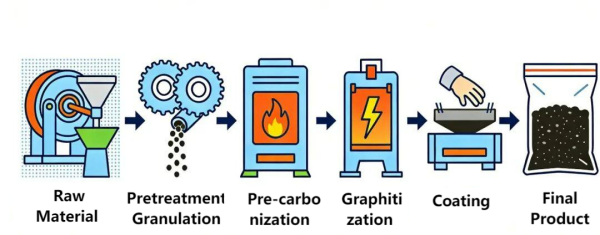
The production process of artificial graphite is like a precise "system engineering," and its core process typically includes five key steps:
1. Raw material pretreatment: Petroleum coke and needle coke are first crushed and screened, then mixed uniformly with a pitch binder in proportion. The particle size distribution and bulk density are adjusted to lay the foundation for subsequent homogenization and forming.
2. Granulation and forming: The mixed materials are further crushed into fine powder, and at 300–700°C, the powder is combined with the pitch binder to form uniform granules — like turning "cement and gravel" into regular "bricks."
3. Pre-carbonization: At around 1100°C, the binder is solidified, and impurities and volatiles are removed, making the particle structure more stable.
4. Graphitization: This is the most critical step. The material is treated in a high-temperature furnace above 2500°C, allowing carbon atoms inside the particles to rearrange into a regular layered structure, improving conductivity and stability.
5. Coating and finishing: A protective layer is coated on the particle surface to reduce reactions with the electrolyte and improve initial charge-discharge efficiency. Finally, through processes such as screening and magnetic separation, artificial graphite products with consistent performance and specifications are obtained.
Artificial graphite production process diagram
Part 03
Why Lithium Battery Anodes Prefer Artificial Graphite? — Key Advantages
The core task of a lithium battery anode is to "store and transport lithium ions." The key advantages of artificial graphite are:
· Long cycle life: Artificial graphite particles have high strength. During the "expansion–contraction" cycles of battery charging and discharging, they are less prone to breakage and pulverization, supporting thousands of cycles and extending battery life.
· High energy density: Its regular and compact layered structure can accommodate more lithium ions in the same volume. Batteries using it can achieve an energy density of 250–300 Wh/kg, enhancing the driving range of new energy vehicles.
· Excellent fast-charging performance: The high-strength structure resists stress caused by rapid lithium-ion insertion during fast charging, reducing structural damage and providing stable support for fast-charging batteries.
· Excellent consistency and processability: From raw materials (petroleum coke, needle coke, etc.) to processing (crushing, granulation, graphitization), the entire process is controllable, ensuring high batch consistency and benefiting battery pack uniformity.
· Higher safety: Compared with silicon-based anodes, artificial graphite has a lower expansion rate, reducing the risk of battery swelling and short circuits.
· Cost and industrial maturity: Raw materials such as petroleum coke and needle coke are stable by-products with controllable costs. China is a major global producer, with a complete industrial chain, sufficient capacity, and high cost performance.
Part 04
Application Scenarios of Artificial Graphite — Beyond Phones and Vehicles
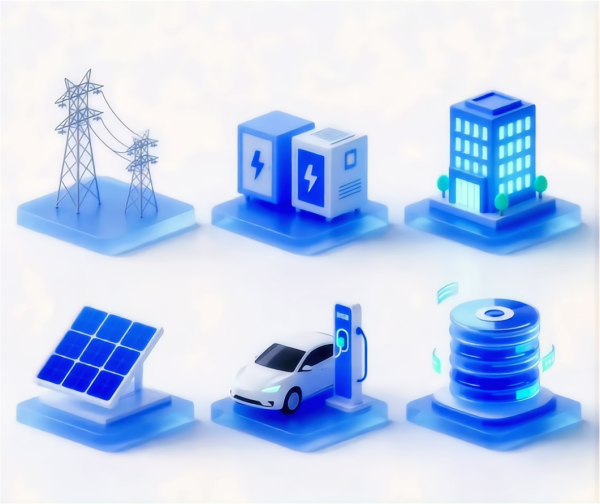
In addition to mobile phones, laptops, and new energy vehicles, the application scenarios of artificial graphite continue to expand:
· Energy storage systems: In grid energy storage and home storage systems, its long cycle life and stability ensure reliable long-term operation.
· High-end manufacturing: Due to its high-temperature resistance and corrosion resistance, it is also used in metallurgical electrodes and high-temperature components in aerospace.
· Technological upgrades: Through doping and composite technologies, artificial graphite can be combined with silicon-based materials to break capacity limits, potentially enabling the next generation of battery performance improvements.
From mobile phone battery life to the widespread adoption of new energy vehicles, artificial graphite, though hidden inside batteries, profoundly impacts our lives. Its core value lies in using precise artificial control to overcome the performance limitations of natural materials, making it an indispensable key material in the new energy era.
Looking to the future, through material modification, process optimization, and intelligent manufacturing upgrades, the exploration of next-generation battery technologies will continue. With smarter anode material solutions, this "invisible hero" will unleash even more powerful energy.
Feel free to contact us anytime for more information about the Anode Material market. Our team is dedicated to providing you with in-depth insights and customized assistance based on your needs. Whether you have questions about product specifications, market trends, or pricing, we are here to help.
No related results found




0 Replies